VRA Deelmobiliteit

Vervoerregio Amsterdam

AutoAdapt
Making shared cars feel like your own

A service design concept for busy working parents · 2024

Role & FormatService & UX/UI Design
ToolsFigma, Miro
Year2024 (Feb — Jun)
ContextCMD Minor Service Design

Project Overview & Brief

How do you make shared cars attractive enough that busy parents would use them next to their own?

The Vervoerregio Amsterdam (VRA) wants more people to choose shared mobility, but most municipalities leave it to the market, so what’s on offer is fragmented and little used. For my Service Design minor I narrowed the topic to one group: busy working parents in Hoofddorp who drive their kids to sports, starting at sports complex SKWA in Floriande.

Design challenge

How can I make shared mobility attractive and fun for busy working parents, so they see it as a valuable addition to their existing travel and become less dependent on their own car?

Research & User Insights

I started with the parents, not the product.

I mapped the stakeholders (first with two classmates, then with the whole class), tried an OV-fiets myself to feel what first-time use is like, and interviewed five parents at the sports complex about how they travel and what they think of shared mobility.
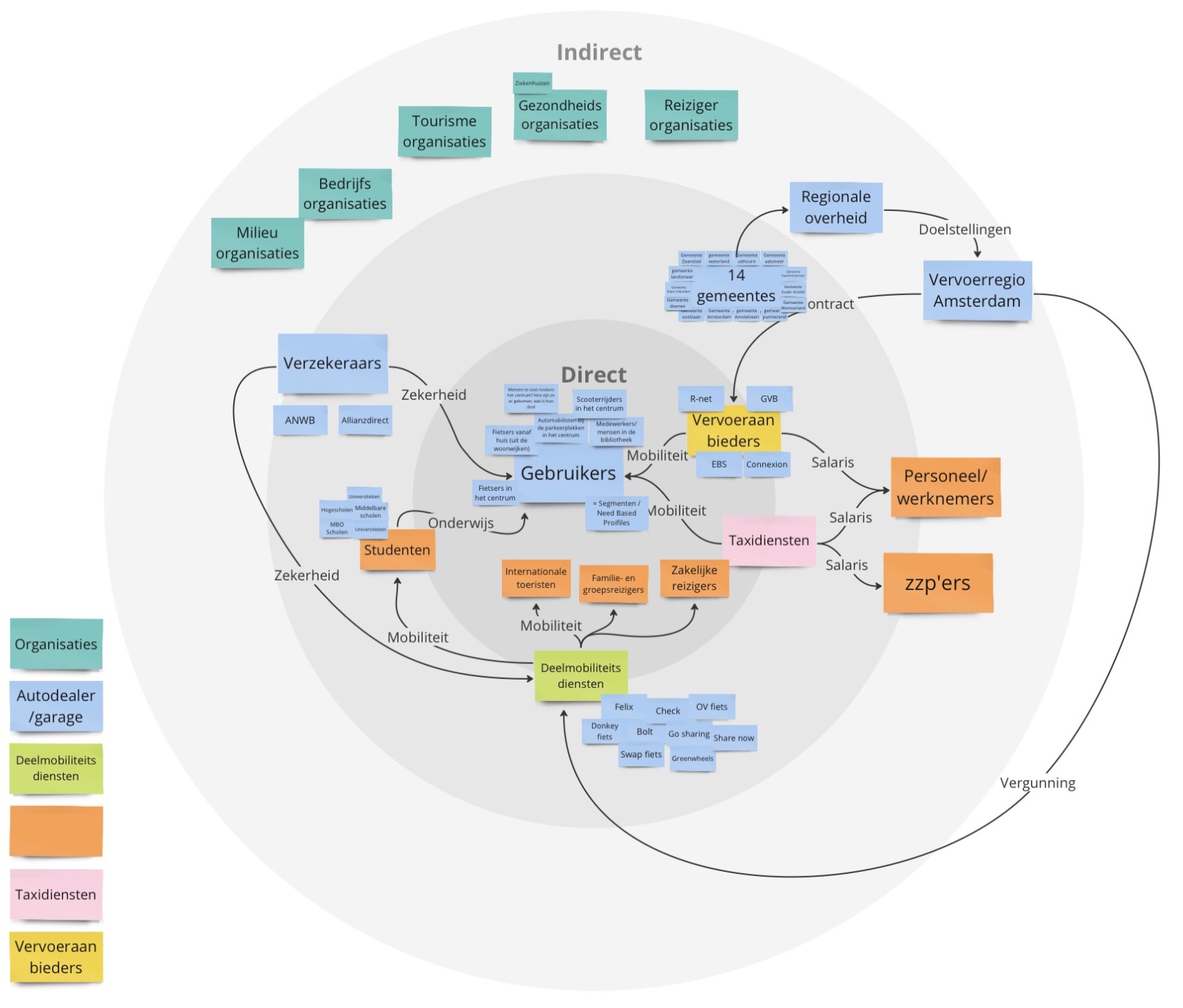
Stakeholder map
Stakeholder map

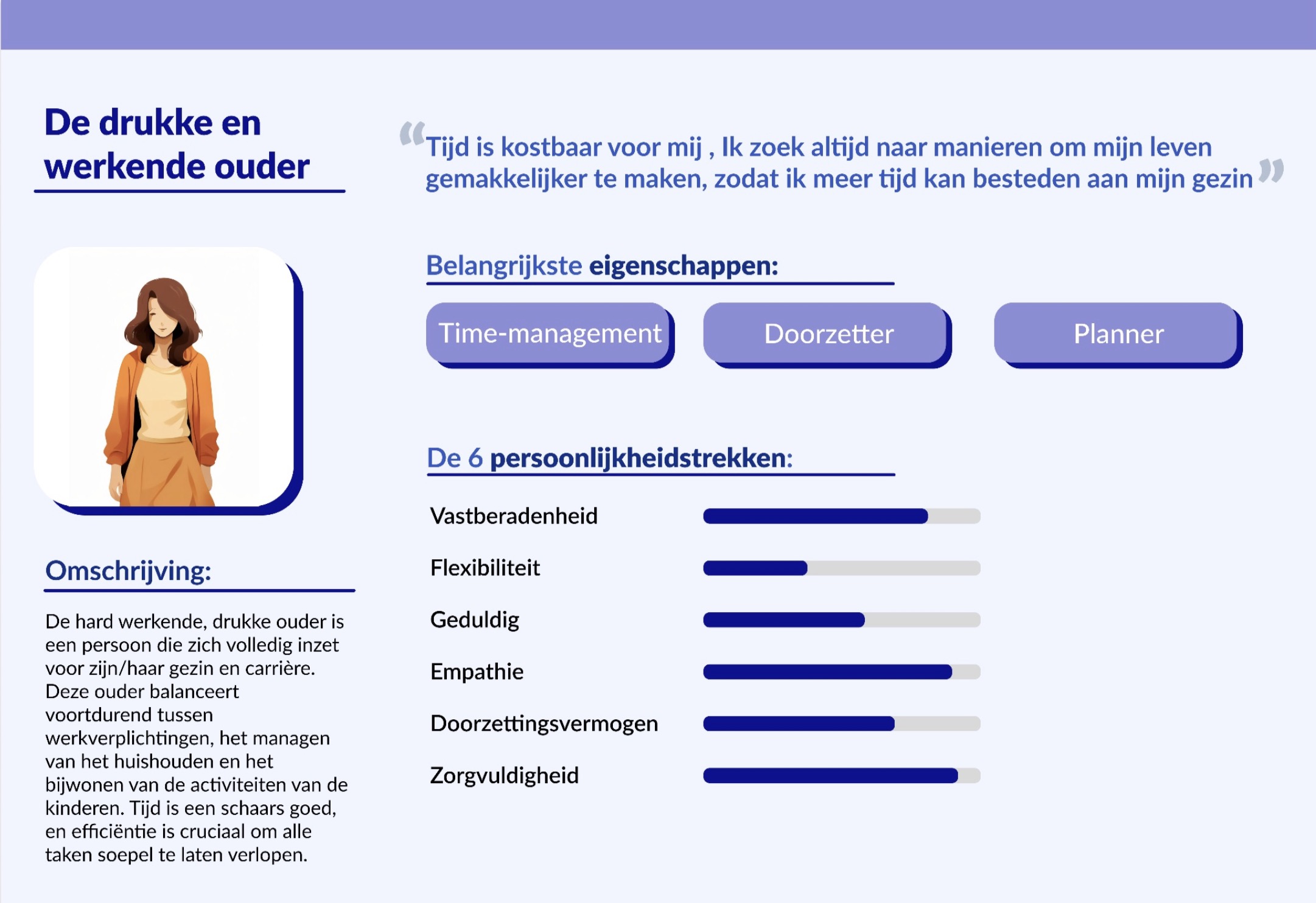
Need-based profile of a busy working parent

Need-based profile: the busy working parent

What parents told me:

I wouldn’t easily get in a car with my kids that isn’t mine. I don’t know who used it before.

Mother, 38HR manager
Trust

I don’t want to lose time on research or reservations. If shared mobility were efficient, I’d use it sooner.

Mother, 40Lawyer
Effort

It feels like shared mobility is a “cheap option” for people who have less. It doesn’t have to be, but that’s the feeling I get.

Father, 42Project manager
Perception

What I took away: parents are open to shared cars for short trips like sports and groceries, but three things hold them back: trust (who used this car before?), effort (extra planning and reserving) and perception (shared cars feel like a “cheap option”). On top of that, today’s offer isn’t built for families, with child seats and space as the missing pieces.
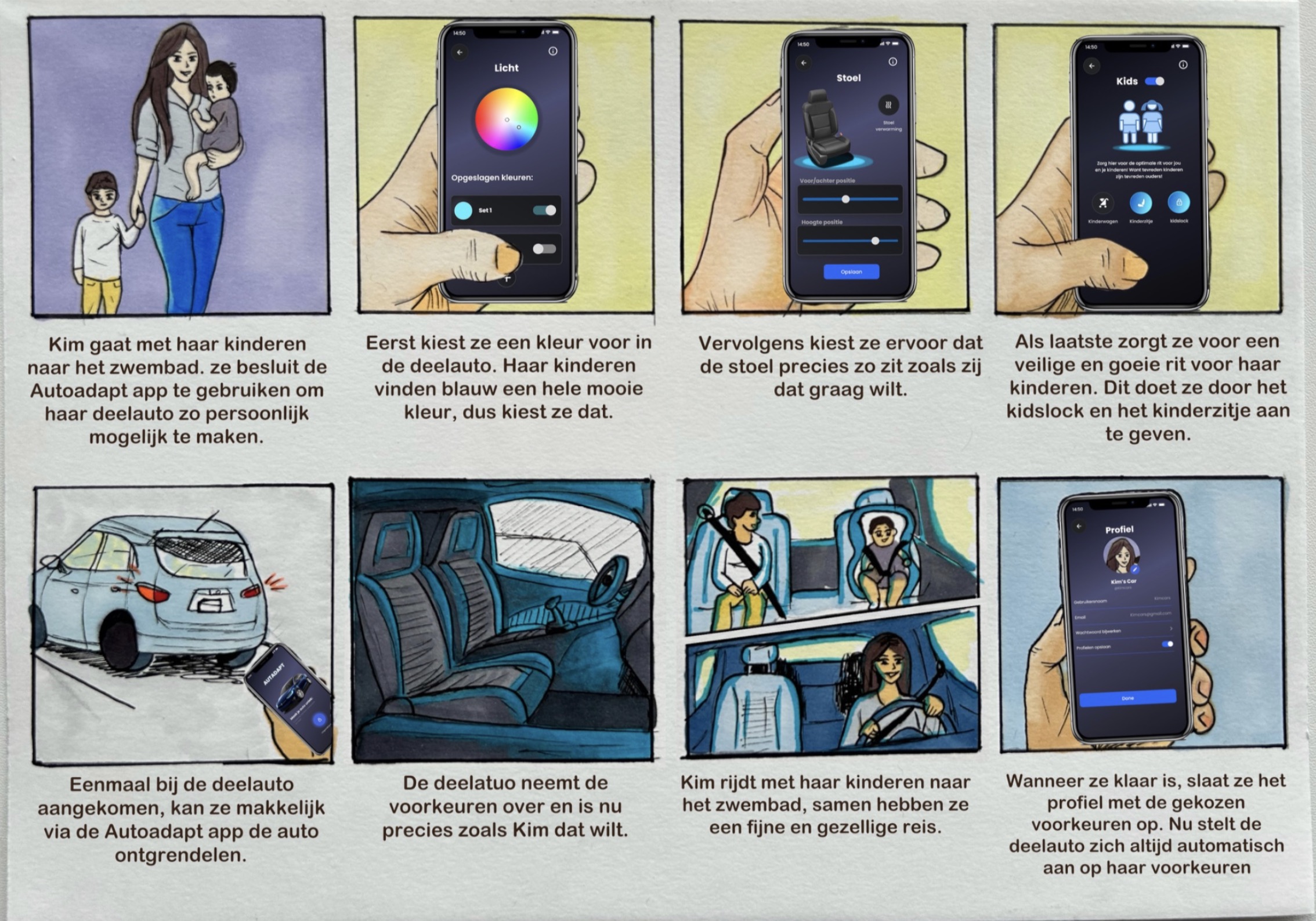
Storyboard

A parent books a shared car for the sports trip, and the car adapts to her before she steps in.

AutoAdapt storyboard

I led the client presentation with this storyboard and walked through it step by step

Final Prototype

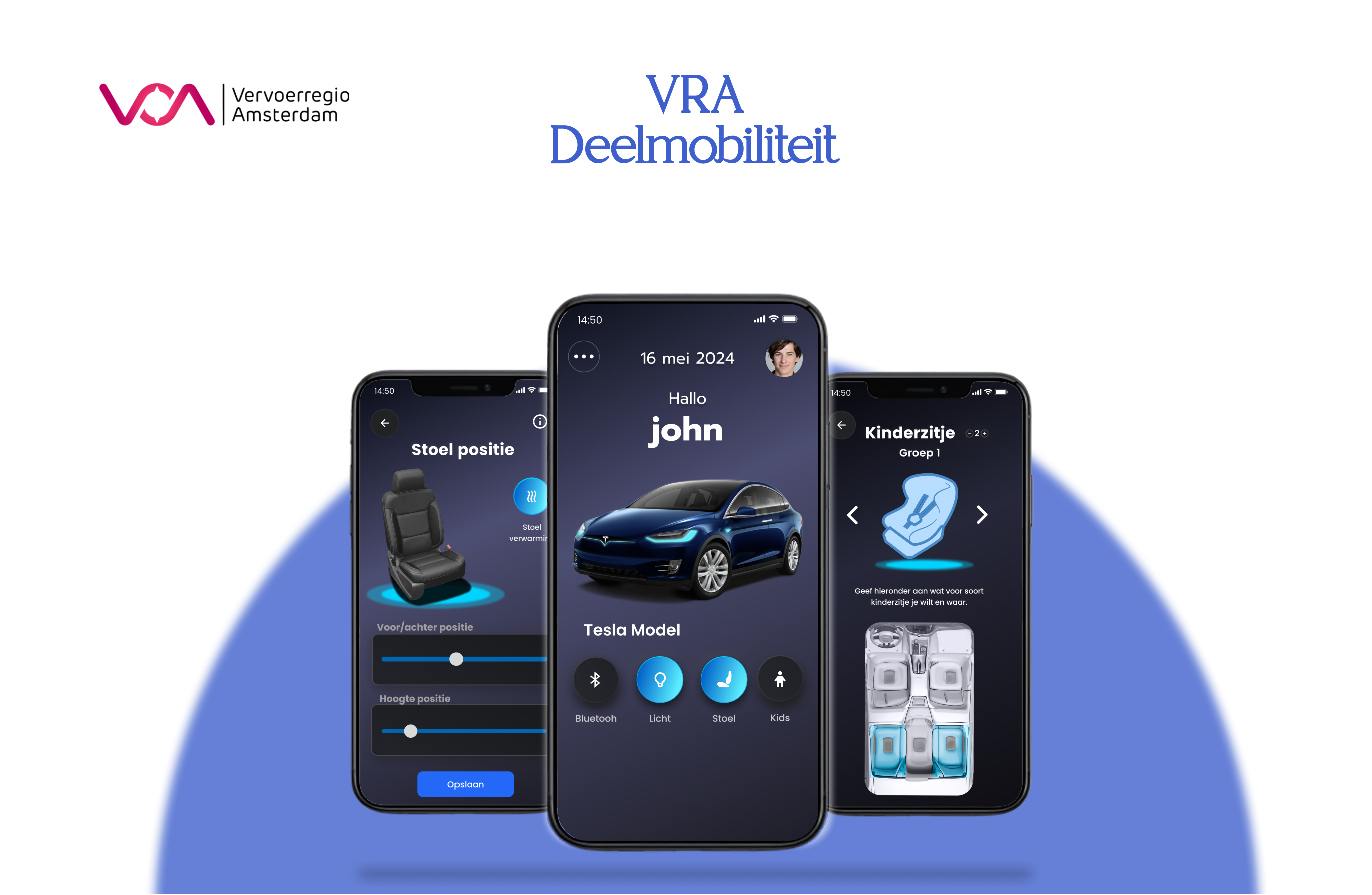
Three functions and one saved profile, designed to make a shared car feel like your own.

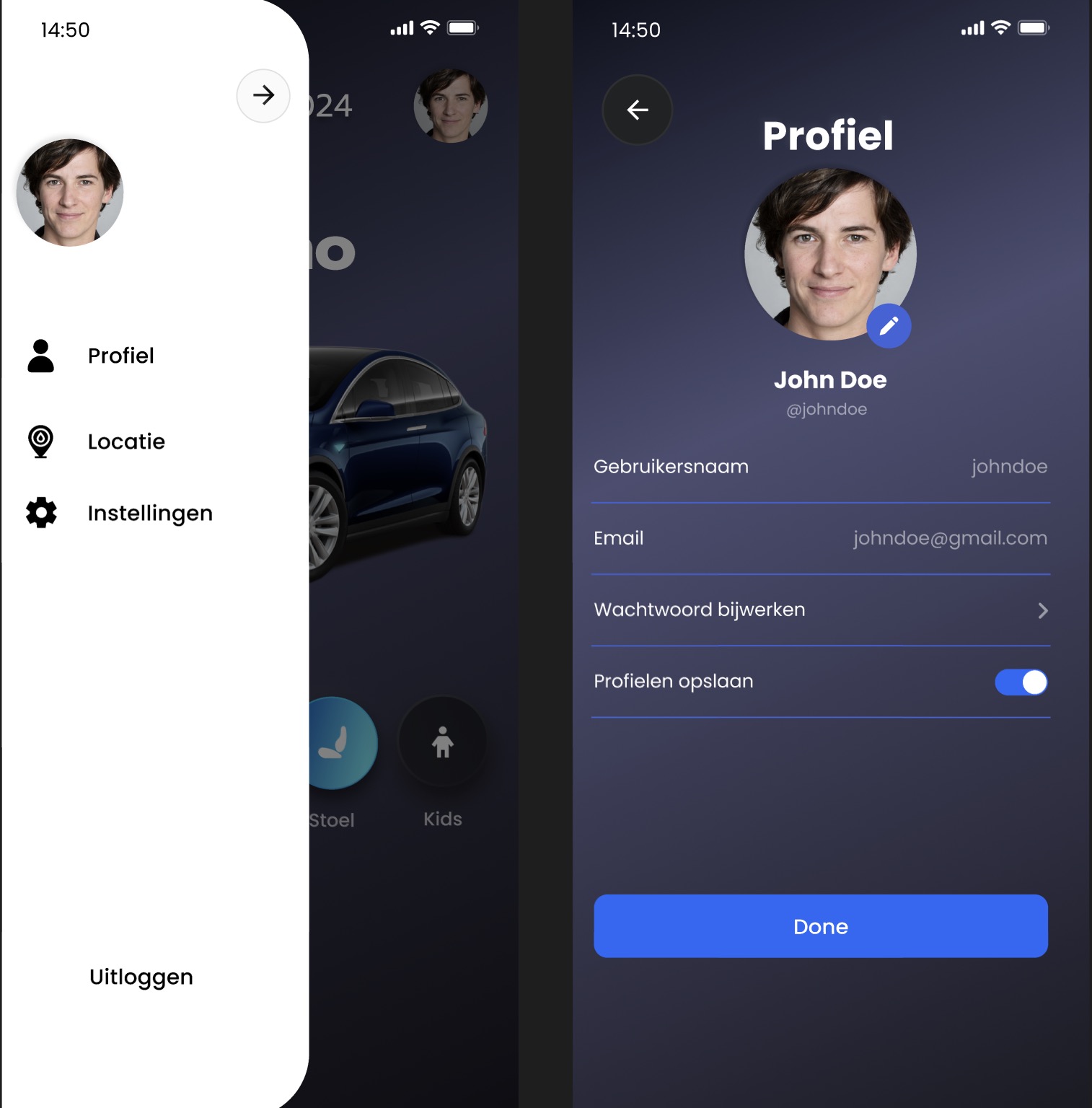
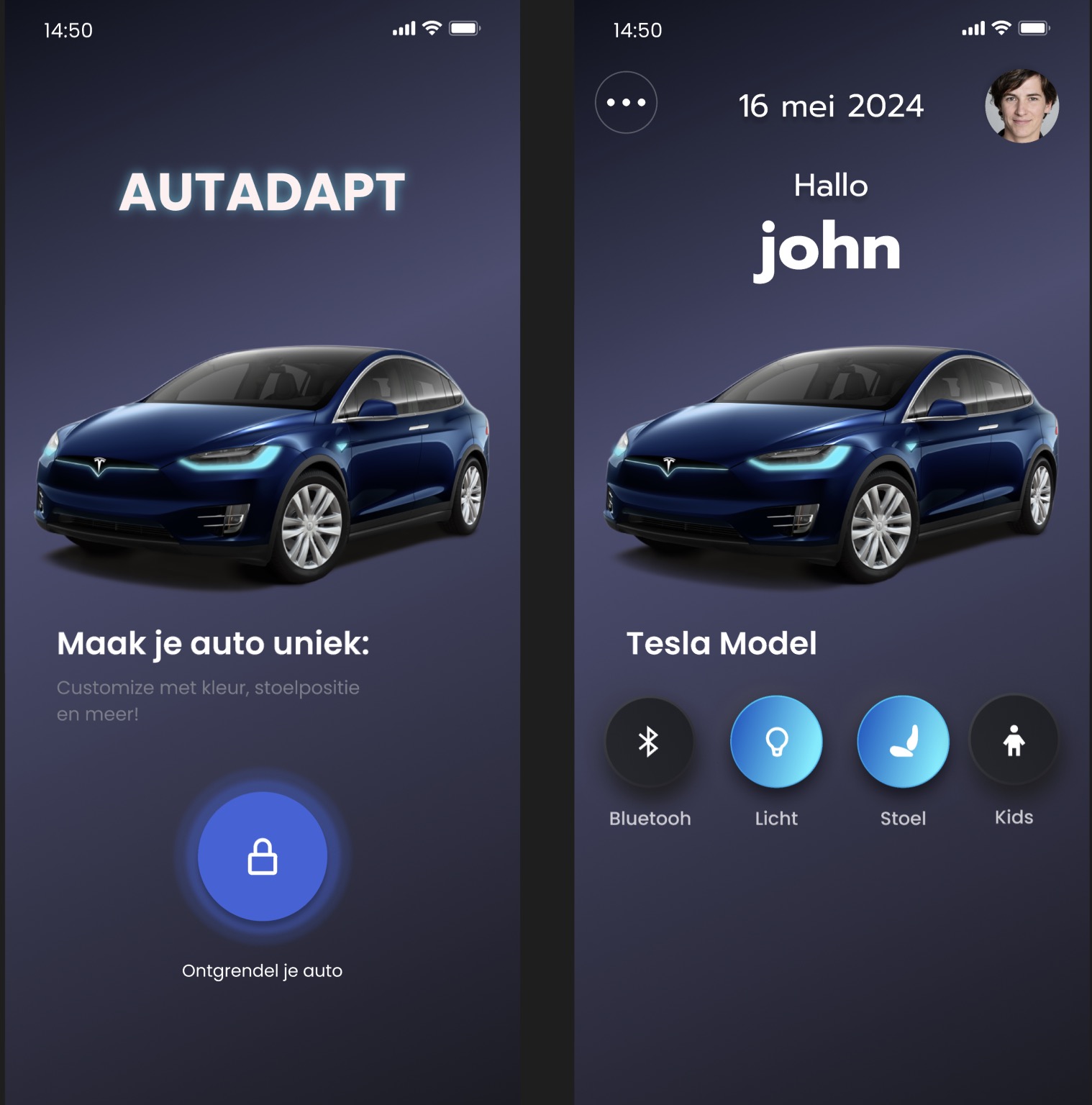
App start

01 · App start

Profile

02 · Profile

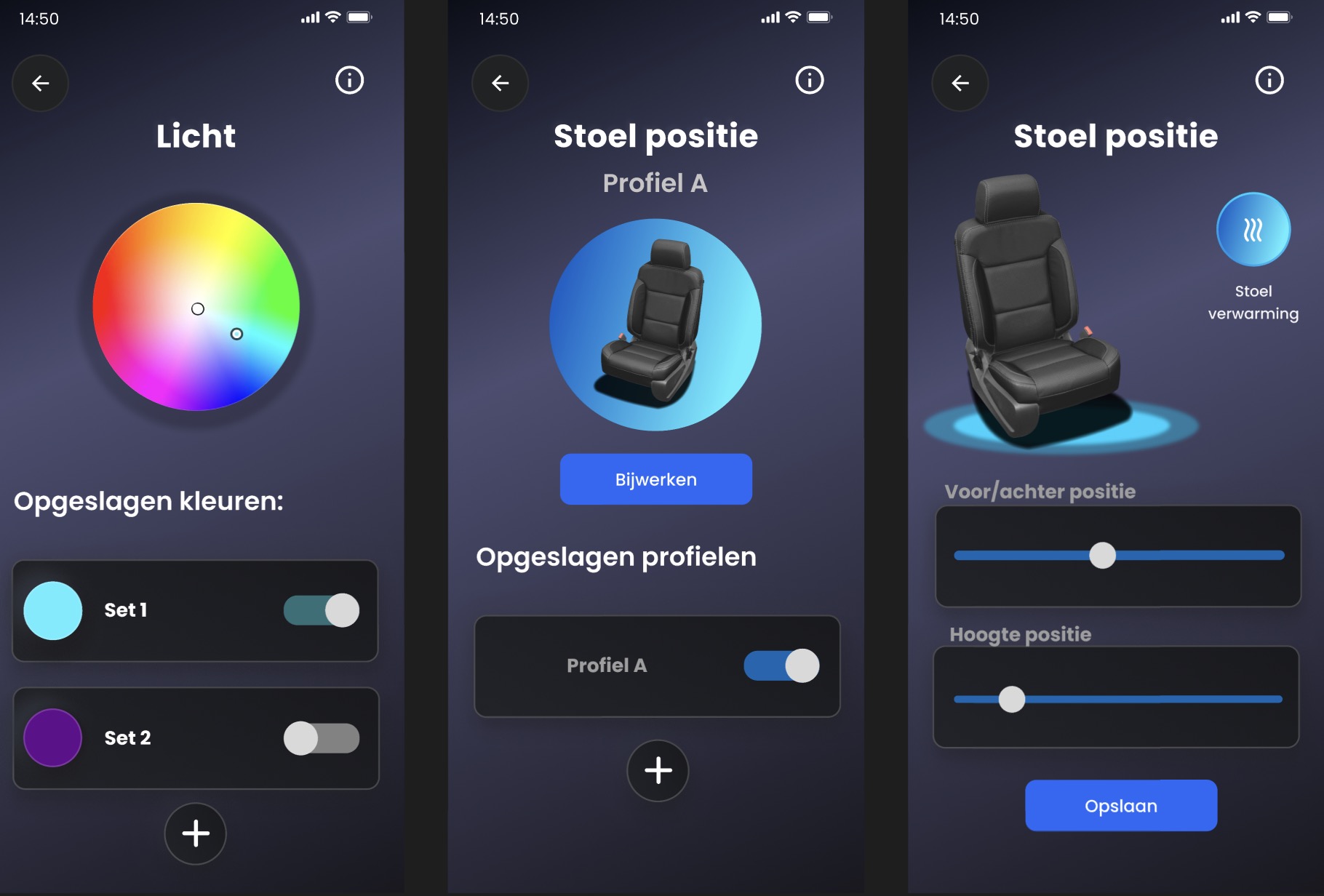
Light and seat

03 · Light & seat

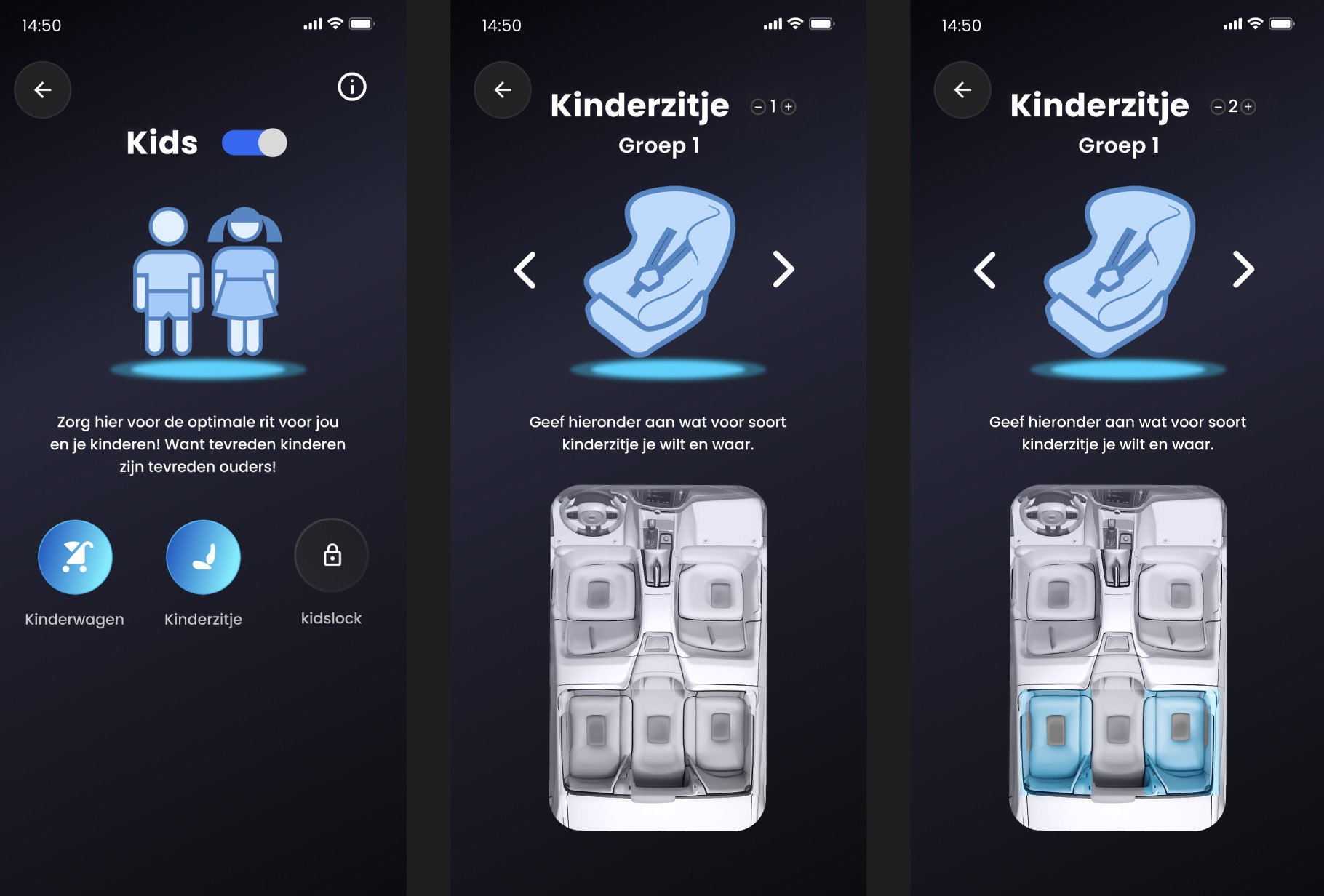
Kids function

04 · Kids function

Light

Choose colour sets for the interior lighting and add your own. Two defaults are included.

Seat

Set the seat position, height and heating, saved per person so every driver gets their own setup.

Kids

Pick child seats by age and weight group, say where each one goes, signal a stroller, and turn on the kids lock for rear doors and windows.

Profile

Set everything once. The car adapts to you every ride, so you never start from zero.

Outcome & Reflection

11Parent interviews
5Concepts
3Test rounds
12Test sessions

I presented the concept to VRA on 20 June 2024, with the storyboard, a prototype video and a clear piece of advice: make shared cars feel familiar before you make them cheaper. Personalisation, family features and reliable infrastructure lower the threshold for parents.

Feedback changed my direction twice: from replacing the family car to complementing it, and from a stand-alone rental app to an add-on that fits the systems VRA already works with.

Small details carried the most weight in testing. A clearer seat label and a lamp icon made the interface understandable at a glance.

What’s still open: how a car physically receives these preferences (child-seat installation, system integration) remained a concept. Next I’d talk to providers like Sixt to find out what is feasible.